
Outstation Cab Route
Faridabad to Char Dham Taxi Service
Char Dham from Faridabad is the same multi-day mountain circuit as from anywhere else in NCR — plan on ten to twelve days, with the drive to Rishikesh being the easy part.
Route Overview
Faridabad to Char Dham Yatra by Road
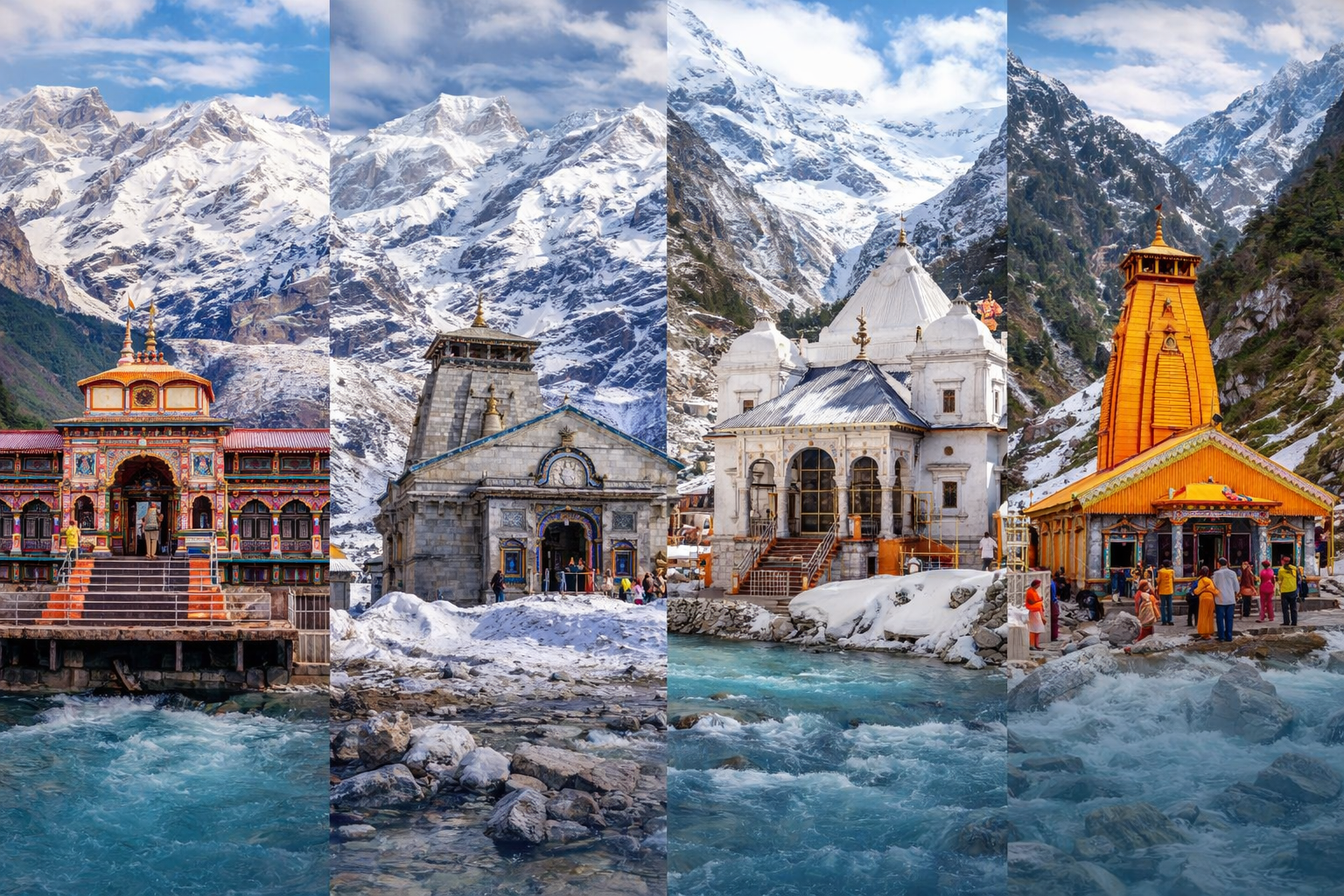
The Char Dham circuit covers four temples — Yamunotri, Gangotri, Kedarnath and Badrinath — spread across the Garhwal Himalayas. From Faridabad the cab crosses Delhi to join the Delhi-Dehradun Expressway at Akshardham, reaching Rishikesh before the traditional yatra sequence begins.
Two of the four dhams need walking beyond where the cab can go. Yamunotri is reached by a trek of around 5 to 6 km from Janki Chatti, and Kedarnath needs a longer trek of around 16 to 18 km from Gaurikund, or a separately booked helicopter. Gangotri and Badrinath are road-accessible all the way.
Both the opening and closing dates shift a little every year around Akshaya Tritiya in spring and Bhai Dooj in autumn. Uttarakhand also requires yatra registration before the trip begins, done online or at the counters in Haridwar and Rishikesh.
Travel Details
Distance, Time and Route Highlights
From Faridabad the cab crosses Delhi to join the Delhi-Dehradun Expressway at Akshardham, reaching Rishikesh in roughly the same time as a Haridwar or Rishikesh trip. From there the road narrows and climbs for the rest of the circuit.
YamunotriGangotriKedarnathBadrinath
Route Stages
Faridabad to Char Dham Route Stages
- Faridabad → Akshardham (Delhi) — Crossing Delhi to reach the expressway entry point
- Akshardham (Delhi) → Rishikesh — Via the Delhi-Dehradun Expressway and the Haridwar spur; the starting point for the circuit
- Rishikesh → Barkot — First leg of the mountain circuit, for Yamunotri
- Barkot → Uttarkashi — For Gangotri
- Uttarkashi → Sonprayag — For Kedarnath — reached from here by trek or helicopter
- Sonprayag → Joshimath — Final leg before Badrinath
Stops Along the Way
Places to Stop Between Faridabad and Char Dham
- Haridwar (rest stop) — Common first halt, where many groups begin the registration process
- Rishikesh (staging point) — Most groups halt here before starting the mountain sections
- Rudraprayag (rest stop) — Where the Alaknanda and Mandakini rivers meet
Places to Visit
Top Attractions in Char Dham
- Yamunotri Temple — Dedicated to the goddess Yamuna and the westernmost point of the four dhams, this temple requires a trek of about 5 to 6 km from Janki Chatti to reach. It's known as one of the coldest legs of the yatra, which is why it's often scheduled early in the circuit.
- Gangotri Temple — This temple marks the source point of the Ganga near Gaumukh and is reachable entirely by road, unlike Yamunotri or Kedarnath, both of which require a trek. Reaching the glacier source itself further along calls for a much longer walk, reserved for pilgrims with extra time.
- Kedarnath Temple — This ancient stone temple, one of the twelve Jyotirlingas, is reached by a trek of roughly 16 to 18 km from Gaurikund, or by helicopter from nearby pads for those unable to walk it. It's generally considered the toughest leg of the entire Char Dham circuit.
- Badrinath Temple — As the final stop on the traditional yatra, this is the only one of the four dhams accessible entirely by road, all the way to the temple gate. The backdrop of Neelkanth peak and the nearby Tapt Kund hot springs give the circuit a fitting endpoint.
- Devprayag — Sitting at the confluence of the Alaknanda and Bhagirathi rivers, this town marks where the Ganga is formally considered to begin, right along the road connecting Rishikesh to the higher dhams. It works as a natural waypoint on the yatra rather than a destination on its own.
Good to Know
Best Time to Travel and Road Notes
Best season: The yatra season runs roughly from Akshaya Tritiya in April or May to Bhai Dooj in October or November. Confirm the exact dates for your travel year, since they shift with the Hindu calendar.
Road note: This is a ten-to-twelve day circuit on mountain roads, not something to compress into a few days. Landslides during heavy monsoon rain are common in July and August.
Cab Choices
Cab Options for Char Dham
An Innova or similar SUV is the practical choice for the whole circuit, given the long climbing stretches and rougher sections near Gangotri and Badrinath.
- An Innova or similar SUV is the practical choice for the mountain roads involved, given the long climbing stretches.
- A Tempo Traveller works for larger family groups, though it moves more slowly on the narrower mountain sections.
- The same cab and driver are usually retained for the full multi-day trip, which simplifies coordination considerably.
- Drivers on this route are experienced with the yatra season's traffic and know when to start early to avoid the worst of it.
FAQs
Faridabad to Char Dham Taxi FAQs
How many days does the full circuit take from Faridabad?
Most groups plan ten to twelve days in total, covering the drive to Rishikesh, all four dhams, and the return. Trying to shorten this usually means rushing the mountain sections, which is neither comfortable nor entirely safe.
Does the cab reach Kedarnath temple directly?
No. The cab goes as far as Sonprayag or Gaurikund, and the last 16 to 18 km to the temple is on foot or by helicopter. This leg needs its own planning rather than being squeezed into a driving day.
Is yatra registration compulsory?
Yes, Uttarakhand requires registration for all Char Dham pilgrims before the yatra starts. It can be completed online in advance or at the counters in Haridwar and Rishikesh — worth doing before leaving Faridabad.
When are the temples open?
Roughly from Akshaya Tritiya in April or May to Bhai Dooj in October or November, though exact dates shift each year with the Hindu calendar.
Which vehicle is best for the circuit?
An Innova or similar SUV handles the mountain roads better than a sedan, especially on the rougher stretches near Gangotri and Badrinath. Larger groups can take a Tempo Traveller.
Is the monsoon a bad time to travel?
It's generally avoided if possible — landslides and road closures are more common in July and August. Many families prefer the weeks right after the season opens or just before Bhai Dooj.
Can the same driver stay for the whole trip?
Yes, the same cab and driver are usually retained for the full circuit, which simplifies coordination over the ten-to-twelve-day trip. A per-night driver allowance applies.