
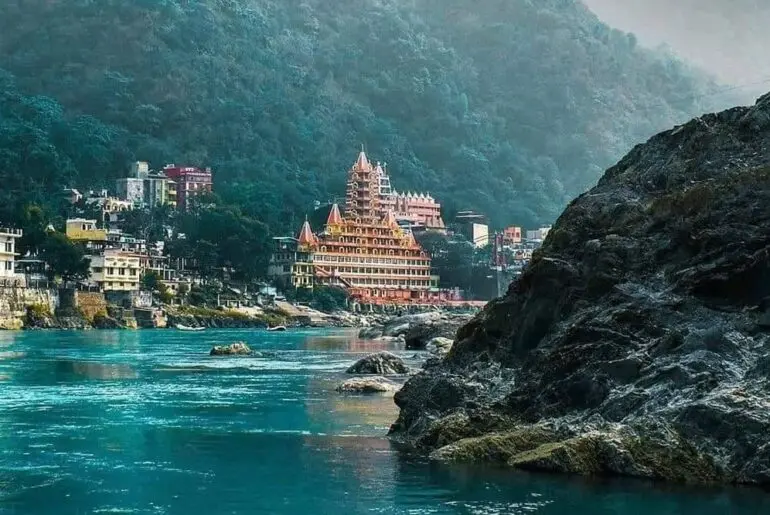
Outstation Cab Route
Gurgaon to Rishikesh Taxi Service
Gurgaon to Rishikesh is a single-day drive that most travellers plan around either the evening Ganga Aarti at Parmarth Niketan or an early rafting slot the following morning.
Route Overview
Gurgaon to Rishikesh by Road
The Delhi-Dehradun Expressway, fully open since April 2026, has reshaped this route. From Gurgaon the cab crosses into Delhi to join the expressway at Akshardham, then covers Baghpat, Shamli and Saharanpur before a six-lane spur branches off to Haridwar, with Rishikesh reached by the same road onward from there, about 25 km further. The expressway itself brings the roughly 213 km Delhi-Dehradun corridor down to about two and a half hours, a major change from the old six-hour highway drive.
As before, the driver weighs the day's traffic before committing to a route — the expressway via Baghpat and Shamli is the default now, but the older Meerut-Muzaffarnagar-Roorkee highway is still there as a fallback if getting across Delhi to Akshardham looks slower than usual that day.
Families heading for the ghats and the evening aarti, and younger groups planning an early rafting slot, both benefit from the shorter run in — a same-day departure from Gurgaon now leaves more of the day free at the other end, whether that means reaching Parmarth Niketan in time for aarti or getting an early start on the river the next morning.
Travel Details
Distance, Time and Route Highlights
From Gurgaon the cab crosses Delhi to join the Delhi-Dehradun Expressway at Akshardham, runs via Baghpat, Shamli and Saharanpur, then takes the six-lane spur into Haridwar before continuing on the existing road to Rishikesh, about 25 km further. The expressway itself covers the roughly 213 km Delhi-Dehradun corridor in about two and a half hours; depending on the day's traffic, the driver may instead take the older Meerut-Muzaffarnagar-Roorkee highway.
Ganga riversideyoga retreatsweekend travel
Route Stages
Gurgaon to Rishikesh Route Stages
- Gurgaon → Akshardham (Delhi) — Crossing Delhi to reach the expressway entry point; timing depends on the day's traffic
- Akshardham (Delhi) → Baghpat — Start of the Delhi-Dehradun Expressway
- Baghpat → Shamli
- Shamli → Saharanpur
- Saharanpur → Haridwar — Via the six-lane spur that branches off the main expressway
- Haridwar → Rishikesh — Existing road onward from the spur; unchanged by the expressway
Stops Along the Way
Places to Stop Between Gurgaon and Rishikesh
- Expressway service plaza (Baghpat-Shamli stretch) (rest stop) — Fuel, food and washroom facilities along the new expressway
- Haridwar (temple) — Often added as a short darshan stop before Rishikesh
Places to Visit
Top Attractions in Rishikesh
- Laxman Jhula — One of Rishikesh's most recognisable landmarks, this pedestrian suspension bridge crosses the Ganges and links two sides of town. Walking across it, with the river visible below and hills rising on either side, is a good way to get oriented early in a visit.
- Ram Jhula — Sitting further along the river from Laxman Jhula, this second suspension bridge is close to several ashrams and tends to draw a slightly busier crowd. It works better as an entry point to the ashram area than as a sight on its own.
- Triveni Ghat — Rishikesh's main ghat hosts the evening Ganga Aarti, drawing crowds who gather along the steps as priests carry out the ritual with lamps set adrift on the water. Visiting around aarti time gives a very different impression than seeing the ghat empty earlier in the day.
- Beatles Ashram — This former ashram, where the Beatles stayed in 1968, now sits partly reclaimed by forest, with graffiti art covering many of the old structures. The abandoned meditation huts give it a distinct, quieter atmosphere compared with the busier riverside sights nearby.
- Neelkanth Mahadev Temple — Set in the hills above Rishikesh, this Shiva temple is linked to the legend of Samudra Manthan, where Shiva is said to have swallowed poison to save the world. The drive up passes through forested hills, and the temple continues to draw a regular flow of pilgrims.
- River rafting on the Ganges — Rishikesh has become one of the region's main centres for river rafting, with rapids graded for different skill and comfort levels. Multiple operators along the river offer both shorter runs and longer routes depending on how much time is available.
Good to Know
Best Time to Travel and Road Notes
Best season: September to November and February to April are the most pleasant. Summer months are workable but hot in the daytime. The monsoon brings high river flow and slippery roads.
Road note: River rafting is generally suspended through the monsoon months, roughly from the end of June until early September, when the flow is too high. If rafting is the main purpose of your trip, confirm the season before booking.
Cab Choices
Cab Options for Rishikesh
For two to four passengers a sedan handles this route comfortably, as there is no serious hill driving before Rishikesh itself. Groups of five or six usually take an Ertiga or Innova, largely for luggage room if rafting or camping gear is involved. Tempo Travellers are common for friend groups and for families travelling together for darshan.
- A sedan is comfortable for two to four passengers, since the road to Rishikesh is flat with no hill driving involved.
- Families of five or six are better served by an Ertiga or Innova, mainly for comfort across a long day of darshan.
- Larger group darshan trips usually go by Tempo Traveller, which keeps everyone moving together between temples.
- Drivers on this route are used to the parking restrictions near the main temples and know where to wait.
FAQs
Gurgaon to Rishikesh Taxi FAQs
How far is Rishikesh from Gurgaon and how long does the drive take?
It is roughly 275 km and takes about six and a half to seven hours with one halt. The distance is not the issue; the time depends heavily on when you leave Gurgaon, since crossing NCR in peak hours can add an hour on its own.
Can we cover Haridwar and Rishikesh in the same trip?
Yes, and most people do. Haridwar falls on the way about 25 km before Rishikesh, so a common plan is a short darshan stop at Har Ki Pauri on the way in, then continuing to Rishikesh for the night.
Is a one-day return trip to Rishikesh practical?
It is possible but tiring, since you would be looking at roughly thirteen hours of driving plus sightseeing. Most travellers prefer at least one night, particularly if the evening aarti or rafting is part of the plan.
Are toll charges and parking extra?
Toll, state entry charges and parking are normally charged at actuals over and above the fare, as they depend on the vehicle and route. Please confirm the arrangement on the call before the trip.
What is charged for the driver on an overnight stay?
A per-night driver allowance applies on multi-day trips and covers the driver's meals and stay. It is standard for outstation travel and is confirmed at booking.
Which vehicle suits a group carrying rafting or camping gear?
An Innova or a Tempo Traveller is the practical choice when there is bulky gear, since boot space runs out quickly in a sedan with five passengers. For a couple or a small family without much luggage, a sedan is comfortable enough.
Can the cab take us to Neelkanth Mahadev Temple?
Yes, though it is about 30 km from town on a narrow winding hill road and takes longer than the distance suggests. It is best planned as a separate half-day rather than squeezed into the arrival day.
When should we leave Gurgaon to reach for the evening aarti?
Leaving between 4 and 6 in the morning comfortably gets you to Rishikesh by mid afternoon, with time to check in and reach the ghat before the evening aarti begins.