
Outstation Cab Route
Ghaziabad to Ayodhya Taxi Service
Ghaziabad to Ayodhya is a long-distance route best planned as a two-day journey with an overnight halt, most commonly at Lucknow.
Route Overview
Ghaziabad to Ayodhya by Road
Ayodhya has seen a sharp rise in visitors since the Ram Mandir opened, and the road from Ghaziabad covers a genuinely long distance. Most of the route runs on expressway, first towards Agra and then on the Agra-Lucknow Expressway, before the final stretch to Ayodhya on state highway.
The distance is the main planning factor here, not the road quality. Groups either break the journey with a night at Lucknow, which is also worth a short stop in its own right, or drive through with several halts and rest on arrival before darshan the next morning.
Many families combine Ayodhya with Prayagraj or Varanasi, since all three sit within a few hours of each other once you're in that part of Uttar Pradesh. If that's the plan, it's worth deciding the full circuit before booking.
Travel Details
Distance, Time and Route Highlights
From Ghaziabad the cab joins the expressway network towards Agra and continues on the Agra-Lucknow Expressway, covering a substantial part of the journey on fast, controlled-access road. The final stretch from Lucknow to Ayodhya runs on state highway with more town traffic.
Ram Mandir travellong-distance comfortmulti-day devotional plans
Route Stages
Ghaziabad to Ayodhya Route Stages
- Ghaziabad → Agra — Joins the expressway network; the fastest opening leg
- Agra → Lucknow — Agra-Lucknow Expressway; the usual overnight halt point
- Lucknow → Ayodhya — Final leg on state highway with more town traffic
Stops Along the Way
Places to Stop Between Ghaziabad and Ayodhya
- Agra-Lucknow Expressway service plaza (rest stop) — Official plaza with fuel, food and washroom facilities along the expressway
- Lucknow (rest stop) — The standard overnight halt on this route, and worth a stop in its own right
Places to Visit
Top Attractions in Ayodhya
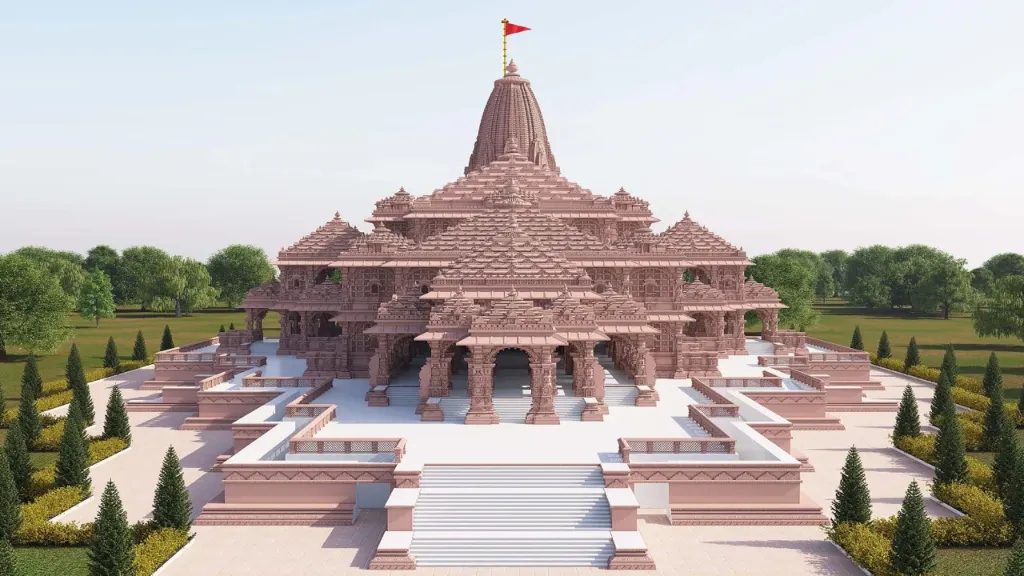
- Ram Janmabhoomi Temple — This is Ayodhya's principal pilgrimage site, and security here is strict, with phones and bags generally not permitted inside. It's worth arranging secure storage for belongings ahead of time rather than finding out about the restriction at the gate.
- Hanuman Garhi — Devotees climb a flight of steps to reach this hilltop temple dedicated to Hanuman, positioned just a short distance from the main temple complex. Being up on the hill gives it a slightly quieter feel compared with the busier ground-level sites nearby.
- Kanak Bhawan — Among Ayodhya's older and more ornate temples, this site is dedicated to Ram and Sita and draws visitors specifically for its detailed interior work. It offers a calmer, more traditional counterpart to the newer, larger temple structures in the town.
- Nageshwarnath Temple — This ancient Shiva temple sits near the Saryu ghats and ranks among the older religious sites in Ayodhya, predating much of the town's recent development. Its location makes it a natural pairing with a visit to the riverfront.
- Saryu Ghats — These riverfront ghats hold an evening aarti, drawing crowds who gather along the steps to watch the ritual performed with lamps set on the water. It's a good way to end a day of temple sightseeing on a more reflective note.
Good to Know
Best Time to Travel and Road Notes
Best season: October to March is the most comfortable period for a journey of this length. Ram Navami, usually in March or April, and Deepotsav around Diwali bring extremely large crowds and heavy traffic restrictions.
Road note: Fog on the expressway sections in December and January can slow the drive significantly, especially in the early morning. Around major festivals, vehicle access within Ayodhya is restricted and parking is arranged well away from the temple complex.
Cab Choices
Cab Options for Ayodhya
For a journey of this length an Innova or similar SUV is the sensible choice, mainly for comfort over many hours rather than for road difficulty. Sedans are used as well and are fine for two or three travellers.
- An Innova or similar SUV is the sensible choice for a journey this long, mainly for comfort across many hours on the road.
- Sedans work fine for two or three travellers, though the length of this trip makes a higher vehicle more comfortable for most groups.
- Larger families and multi-city pilgrimage groups usually prefer a Tempo Traveller for the extra room.
- The same driver typically stays with you for the full trip, including any overnight halt, which keeps the journey simpler to coordinate.
FAQs
Ghaziabad to Ayodhya Taxi FAQs
Can Ghaziabad to Ayodhya be done in one day by road?
It can be driven in a single very long day, but it isn't comfortable. Most travellers either halt overnight at Lucknow or plan to arrive in the evening and take darshan the following morning after resting.
How long does the drive take?
It's generally a long day's drive spread across two days with a halt, given the distance involved. The expressway sections move well, but the overall length of the route means proper breaks are essential for a comfortable trip.
Where is the usual overnight halt?
Lucknow is the standard stopping point, roughly three quarters of the way to Ayodhya. It has plenty of accommodation and is worth a short stop in itself if your schedule allows a bit of extra time there.
Are toll charges and driver allowance extra?
Yes. Toll, state entry charges and parking are billed at actuals, and a driver allowance applies per night on multi-day trips to cover the driver's meals and stay. These are confirmed at the time of booking.
Can we add Prayagraj and Varanasi to the trip?
Yes, this is a common circuit since all three sit within a few hours of each other in that part of Uttar Pradesh. Mention the full plan while booking so the days, halts and kilometres can be arranged properly.
Which vehicle is best for such a long route?
An Innova or similar SUV is preferred for comfort over many hours, particularly with elderly passengers. Sedans work well for two or three travellers, and Tempo Travellers suit larger family groups.
How close can the cab go to the temple?
Vehicle access near the temple complex is controlled, and during busy periods parking is arranged some distance away with the final stretch covered on foot or by shuttle. Plan for some walking, especially around festivals.