
Outstation Cab Route
Ghaziabad to Prayagraj Taxi Service
Prayagraj is a long haul from Ghaziabad, best planned with an overnight halt rather than attempted as a same-day round trip.
Route Overview
Ghaziabad to Prayagraj by Road
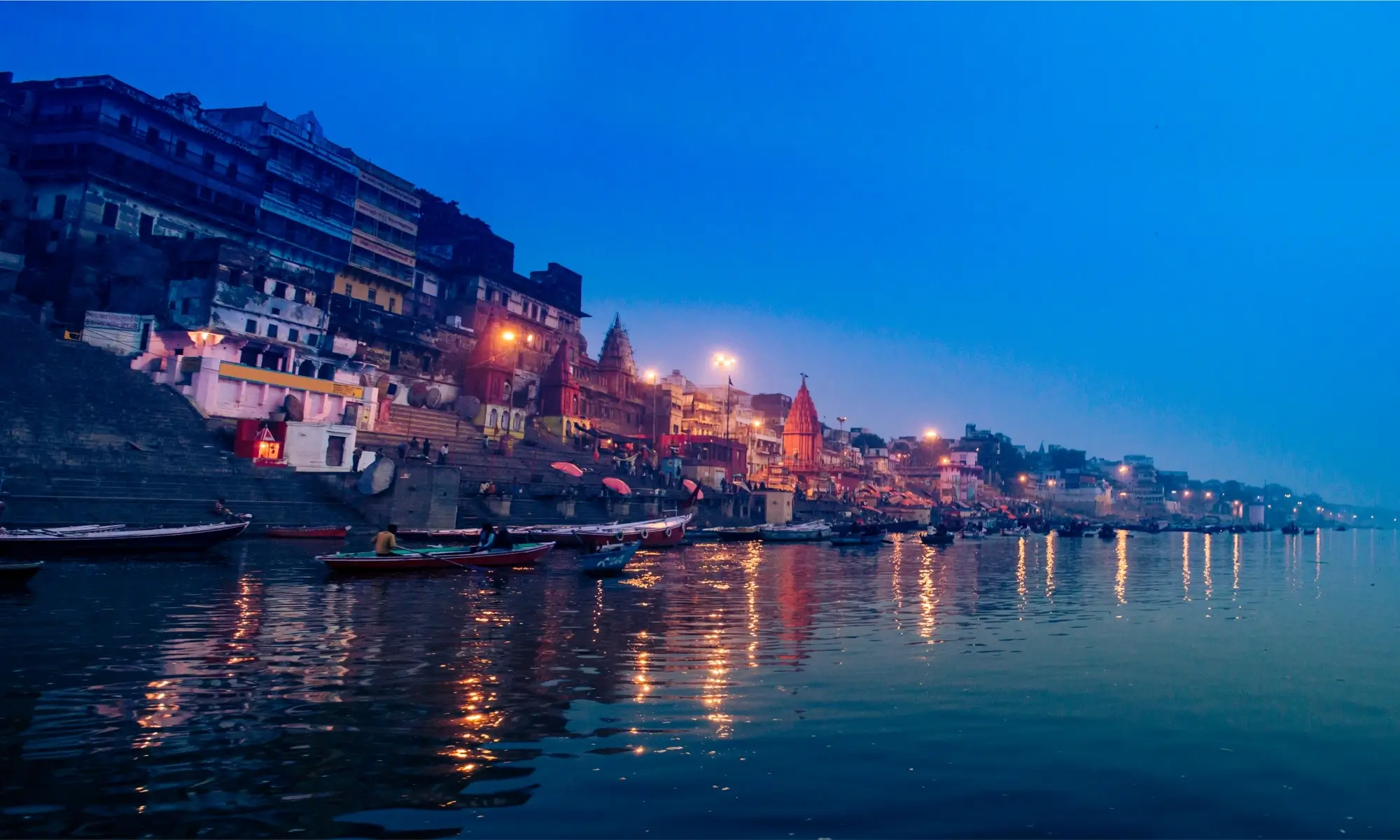
The road from Ghaziabad runs largely on expressway, first towards Agra and then continuing on the Agra-Lucknow Expressway before turning towards Prayagraj, known for the Sangam — the confluence of the Ganga, Yamuna and the mythical Saraswati.
Outside the Kumbh Mela years, when the city and its roads see extraordinary crowding, Prayagraj is a manageable long-distance trip with a single overnight halt, most often at Lucknow. During Kumbh or Magh Mela periods, travel times can stretch well beyond normal.
Many travellers combine Prayagraj with Ayodhya or Varanasi on the same trip, since the three cities sit within a few hours of each other in that part of Uttar Pradesh.
Travel Details
Distance, Time and Route Highlights
From Ghaziabad the cab joins the expressway network towards Agra and continues on the Agra-Lucknow Expressway before turning off towards Prayagraj, covering most of the distance on fast, controlled-access road. An overnight halt at Lucknow is the sensible way to break up a drive this long.
Triveni Sangamreligious travellong-distance taxi comfort
Route Stages
Ghaziabad to Prayagraj Route Stages
- Ghaziabad → Agra — Joins the expressway network; the fastest opening leg
- Agra → Lucknow — Agra-Lucknow Expressway; the usual overnight halt point
- Lucknow → Prayagraj — Final stretch; traffic builds closer to the Sangam area
Stops Along the Way
Places to Stop Between Ghaziabad and Prayagraj
- Agra-Lucknow Expressway service plaza (rest stop) — Official plaza with fuel, food and washroom facilities along the expressway
- Lucknow (rest stop) — The usual overnight halt on this route
Places to Visit
Top Attractions in Prayagraj
- Sangam — This is where the Ganga, the Yamuna and the mythical Saraswati river converge, making it the primary pilgrimage site in Prayagraj and a place that sees particularly large crowds during major religious gatherings. Taking a boat to the actual meeting point of the rivers is a common way to see it more closely.
- Allahabad Fort — Built under Akbar near the Sangam, this fort is controlled by the Indian Army, which restricts public access to only a limited section. Even so, what's visible still conveys a sense of the fort's scale and its Mughal-era construction.
- Anand Bhawan — Once the Nehru family's residence, this building is now preserved as a museum documenting their role in India's independence struggle. It offers a more personal, intimate view compared with the broader historical scope covered by a site like the fort.
- Khusro Bagh — This Mughal-era garden contains several historic tombs, including that of Prince Khusrau, laid out among tree-lined walkways that make it a calmer stop than the busier riverside sites. Visiting outside major pilgrimage periods tends to make it even quieter.
Good to Know
Best Time to Travel and Road Notes
Best season: October to March is generally the most comfortable time to travel. During Kumbh Mela and Magh Mela periods, the city sees extraordinary crowds and road access changes significantly, so plans need a much wider buffer during those windows.
Road note: Outside mela periods, this is a manageable long-distance drive with a single overnight halt. During Kumbh or Magh Mela, road closures and diversions around the city are common — check current advisories if travelling then.
Cab Choices
Cab Options for Prayagraj
An Innova or similar SUV suits the length of this trip better than a sedan, mainly for comfort over a long day rather than road difficulty.
- An Innova or similar SUV is the sensible choice for a journey this long, mainly for comfort across many hours on the road.
- Sedans work fine for two or three travellers, though the length of this trip makes a higher vehicle more comfortable for most groups.
- Larger families and multi-city pilgrimage groups usually prefer a Tempo Traveller for the extra room.
- The same driver typically stays with you for the full trip, including any overnight halt, which keeps the journey simpler to coordinate.
FAQs
Ghaziabad to Prayagraj Taxi FAQs
Can Ghaziabad to Prayagraj be done in a day?
It's a long day if attempted without a halt, and not the most comfortable option given the distance. Most travellers prefer to break the journey with an overnight stay, arriving fresher with more time at the Sangam.
Is this route affected by Kumbh Mela?
Yes, significantly. During Kumbh or Magh Mela, road access around Prayagraj changes with diversions and closures, and journey times can stretch well beyond normal. Plan with a much wider buffer during these periods.
Where is the usual overnight halt?
Lucknow is the standard stopping point on this route, sitting on the way to Prayagraj. It has plenty of accommodation and is worth a short stop in its own right if your schedule allows extra time.
Are toll and driver allowance charges extra?
Yes, toll and any state entry charges are billed at actuals, and a driver allowance applies per night on multi-day trips. These cover the driver's meals and stay and are confirmed at the time of booking.
Can we combine this with Ayodhya or Varanasi?
Yes, both are reasonably close once you're in that part of Uttar Pradesh, and combining them into one circuit is common. Mention the full plan while booking so halts and daily distances can be worked out properly.
Which vehicle suits this route best?
An Innova or similar SUV is more comfortable for the length of this trip than a sedan. Sedans work fine for two or three passengers, while a Tempo Traveller is the usual choice for larger pilgrimage groups.
How close can we park to the Sangam?
Parking near the Sangam gets progressively more restricted during festival periods, with vehicles held further back and the final stretch on foot. On a normal day, parking is far more straightforward and closer to the ghats.